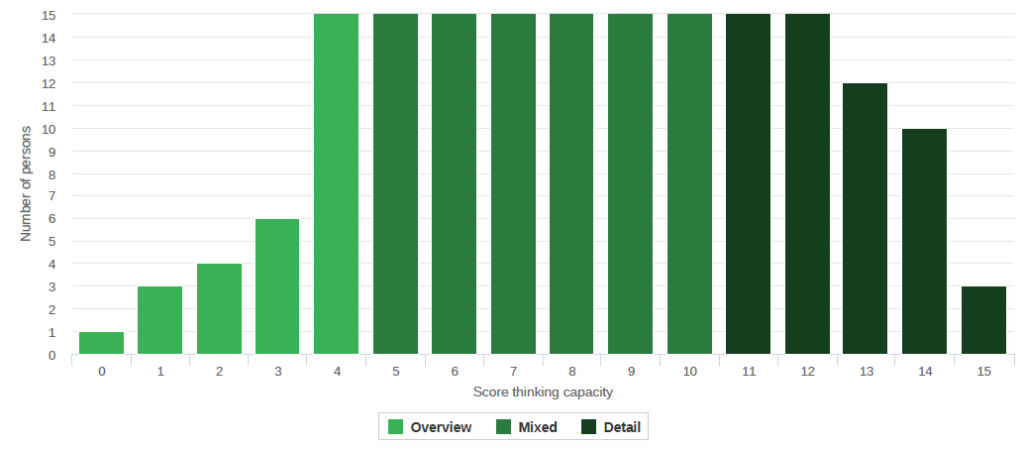
Our brains consist of two halves, each with a different way of thinking. The right hemisphere is strong in creative thinking. It sees the big picture and thinks in pictures and images. There is no sense of time and a strong spatial awareness. It is the realm of imagination, fantasy and opportunities. It appreciates beautiful things, philosophy, and makes sense of things. The right hemisphere is extremely intuitive; it fills gaps with sudden insight, often based on incomplete information, systems, models, feelings or imagination.
The left hemisphere is strong in rational thinking. It is the area of the logic and analytical thinking. It is time sensitive, and does everything with words, names, symbols and definitions. The left half is often seen as the rational side: conclusions based on facts, details, numbers and linear, logical inferences. It is strong in recognizing patterns, math and science and above all delivers practical solutions, grounded in reality.
Thinking pattern
Strong points
Blind spots
Creative area Right hemisphere Range 0 – 5
Has access to multicolor ‘whole’
Zigzags through complexity
Driven by dreams and visions
Moves in uncharted territory
Details slip in between
Tends to more ideas than action
A lot of emotional ups and downs
Locked in a fantasy world
Mixed area Range 6 – 9
Translates idealism to realism
Reduces complexity to simplicity
Roams freely yet waters the plants
Thinks strategically and tactically
Pragmatic at expense of principles
“Everything for everyone” stops once
Wavers between two worlds
Moderation inhibits innovation
Rational area Left hemisphere Range 10 – 15
Love detail / accuracy
Resolves problems linear / logical
Adheres to neat categories
Performs predictable work
Boxed in view of ‘reality’
Misplaced / stifling rigidity
Blindly driven by the clock
World reduced to bits and bytes
The result below gives a good picture what thinking capacity is present in the organization.
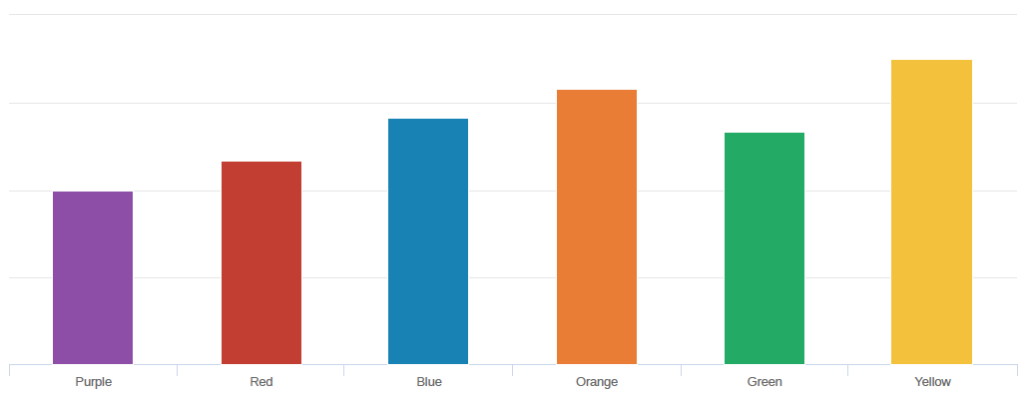
Under pressure, a different value system can be activated in a team than in a rest situation. The following graph shows the percentages for pressure situations.
Value Systems under pressure
Purple (under pressure)
Under pressure, the ranks of the family close. Only the past will be looked at, and traditions are put forward to solve future problems. People who don’t function anymore are not fired, but a different position in the company will be found so they can remain involved. This can be demotivating to other workers who do great work.
Red (under pressure)
Under pressure, there is often conflict, drama or another emotionally charged situation. Employees pay close attention to the mood of the leader before they approach him/her to talk about anything. There is a lot of collegial fighting for power, it is dangerous to show vulnerability. People are lived by day-to-day stuff. Little time is taken to think about the future. Rules and agreements are often not respected.
Blue (under pressure)
Under pressure people fall back on the previous set structures and rules. People hold on to their job discription and will not do more than is asked. Because of their rigid frameworks, matters that fall into a grey area of responsibility will not be handled at all. “That’s not in my job description” or “That’s not my responsibility” are often heard excuses. Customers feel like they are send from a to b. There is a perceptible gap between the different departments and gossip is common. Important matters are rarely openly discussed.
Orange (under pressure)
Under pressure, only results count. Orange people perform better under a certain amount of pressure. When the pressure rises, people become very individualistic. They try to do everything on their own and lose sight of the larger purpose. Opportunism and arrogance reign supreme and cooperative behavior is hard to find. There is a danger that the best employees feel undervalued and will go elsewhere to seek new opportunities. Emotions are suppressed or pushed aside and people often end up feeling empty.
Green (under pressure)
When under pressure, people get together to talk. A green organization does not cope well under high pressure because the basis of cooperation is to allow plenty of time for each other. Time they do not have. In that case, people complain about a lack of communication. Also, people start to talk about each other instead of to each other. Dormant internal conflicts can suddenly emerge. It becomes harder to maintain a good atmosphere. Indecision and doubt occur when there is little time to reach consensus and as a result little action is taken.
Yellow (under pressure)
Under pressure, the attention shifts from action to trying to understand what is going on. Yellow likes to get an overview of the entire system, to be able to analyze where the cause of the pressure lies. Once the cause has been found, choices for progress can be made quickly. A yellow organization can cope with pressure quite flexibly. But when the pressure rises, people will increasingly turn inward to find peace and answers or they will consciously do something relaxing to bring creativity back on track.
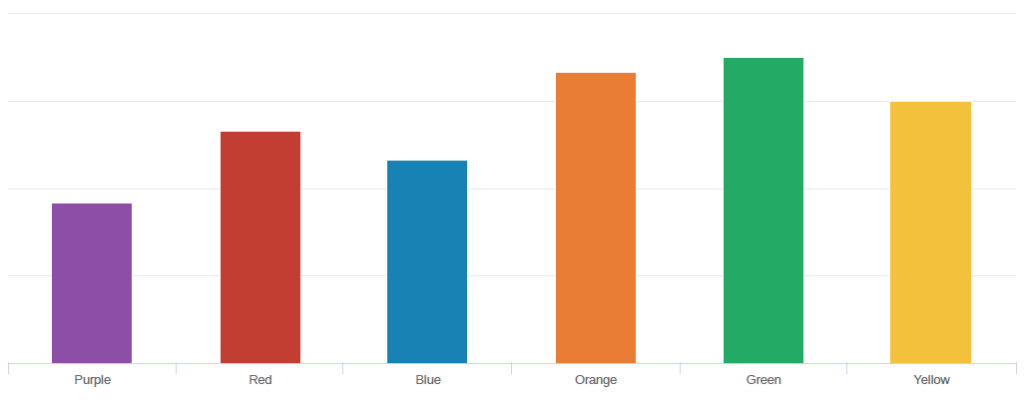
Each person carries all value systems simultaneously. The value systems complement each other sometimes, but are sometimes contradictory. The scores on personal value systems show the distribution of value systems that are most prevalent in your organization.
Value Systems
Purple(normal)
A high score in purple indicates a typical family business. There is a clear company founder about whom epic tales are told. The leader of the organization comes from within the family or has been selected by the family. Decisions on business matters are always made by the leader, at the kitchen table. Mostly family members and friends work at the company. Birthdays and special personal events receive extensive attention at work. The company has a clear link with the village or neighborhood where it is located.
Red(normal)
A high score in red indicates a autocracy. There is a clear leader, someone who everyone fears and respects. The leader makes most of the decisions him/herself, and tends to get involved with everything. Everything has to happen right away, there’s a constant atmosphere of urgency. The pace of work is high, people make quick and short-term decisions. There is a macho atmosphere, acting tough about how hard you work is normal.
Blue(normal)
A high score in blue indicates a bureaucracy. The leader is a reliable person who can sometimes seem boring and colorless. There is a clear structure and responsibilities are sharp and clearly assigned. A certain tranquility reigns in the organization, everything happens right on time and there is a nine-to-five mentality. An agreement is an agreement, not coming through on a deal is a sin. The pace of work is not very high, people go for quality and steadily tick off their work-lists. Employees are docile and loyal and do not question the authority of their superiors.
Orange(normal)
A high score in orange indicates a strategic organization. The leader is a motivator and catalyst, has little patience with emotions and focuses on the end result. There is a hectic atmosphere, full of optimism and big dreams. Multitasking is normal. There are no problems, everything is a challenge. The pace is high, people make fast decisions but don’t go to extremes. Employees work hard, work long hours and then go out (‘work hard, play hard’). People are ambitious. Opportunism is normal. The top is small, so it is “up or out”. Work is project-based and is measured and objectified. Rules and agreements are useful, as long as the entrepreneurial drive is not restricted. People are status-conscious and express it in their appearance (clothes, expensive shoes) and environment (latest gadgets, corner office).
Green(normal)
A high score in green indicates a service-oriented organization. The leader is not clearly recognizable in clothing or status, but merges in the group. The leader is subservient to the group and cares for his/her people. There is a harmonious atmosphere of peace and tranquility. The work is team-oriented, people discuss a lot, share ideas and feelings. Decisions are taken only when everyone is heard. Decisions can take a long time, but when consensus is reached, everyone cooperates 100%. There is little to no internal competition, there is enough space for everyone to give his contribution and add value. People who think differently and diversity are encouraged.
Yellow(normal)
A high score in yellow indicates a self-managing organization. It has several leaders who act as guides. Employees have free access to information, tools and materials. Organizations are flexible so they can respond well to changes. People are motivated by learning and understanding, not through bonuses or penalties. There is a lot of diversity. It is agreed ‘what’ will be done and ‘when’, the employees are given a large degree of freedom about the ‘how’. People are focused on a mutually agreed higher purpose. People, technology, nature and procedures are interrelated and form an integral part of the workflow. Conflicts are resolved through dialogue. Listening and understanding each other is more important than finding a solution.
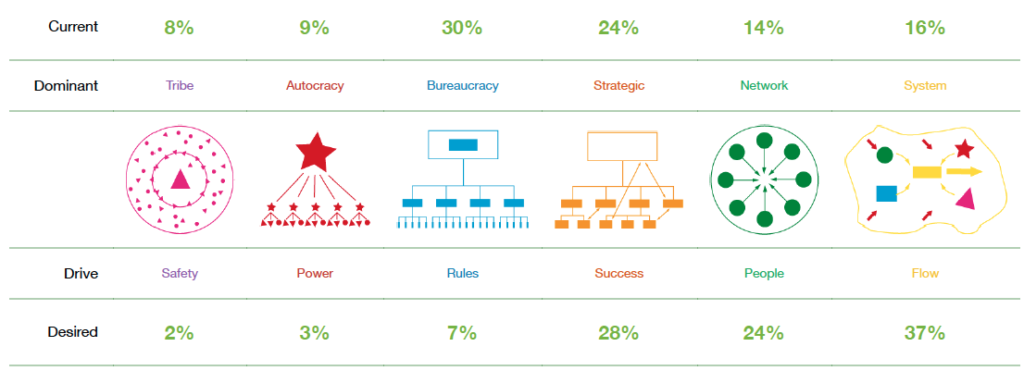
According to the theory an organization can develop from a purple, family-oriented organization to a yellow systemic oriented organization. The cultural development startswith safety (purple), then power-driven (red), to rule-driven (blue),to result-driven (orange), to human-driven (green) and to flow-driven (yellow).
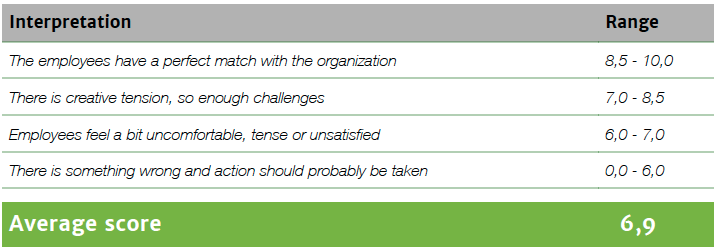
The People Change Score gives an indication of the fit between the employees and the organization. Any tension between the organization and its employees can be found in dissatisfaction with the job, the supervisor or the team. There is also tension if there is a difference between the values demanded by the organization and what people can actually provide.
The scale ranges from 0 to 10. A score between 8.5 and 10 means that employees feel perfect in their organization. A score of between 7 and 8.5 means there is some sort of creative tension. There is enough challenge for the team. A score between 6 and 7 is usually described as “I feel kind of awkward”. There is a measure of anxiety and dissatisfaction. A score below 6 indicates that something is quite wrong and quick action is needed to prevent worse.
People Change Score
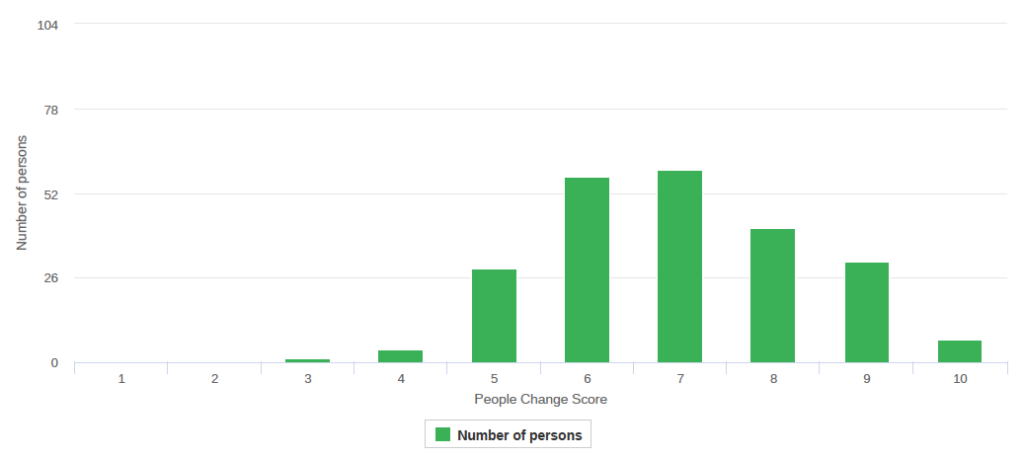
Distribution People Change Score
The distribution of the People Change Score gives the number of persons per score range. The distribution indicates how the average score is built up.
The yellow team culture and people strive for knowledge and understanding of the complex world. The essence of yellow is: ‘The reason for our existence is to be independent, gather as much knowledge as possible and provide as much as possible for others, as realistic as possible. At the same time I am my own person, responsible for and to myself and an island among other people. Continuous development along a certain path is more important than having or doing something. I am involved in the development of the world because of the impact it has on my life as part of the living system. In addition, it is important that the vital force of the earth remains present which is endangered by the combined effects of the people living from the first six value systems’.
How do you recognize a yellow team?
People do their job with pleasure because they do what suits them
Employees have free access to information, tools and materials.
Teams do not have a fixed structure, but are flexibly arranged so that they can respond well to changes
People are motivated by learning and understanding something, not by bonuses or punishments
There is a high diversity, there are many different competencies and that is celebrated
There is not one leader: leaders act as guides, bringing the necessary materials and information to the right place where necessary
Agreements are made about ‘what’ is done and ‘when’, the employees get a large degree of freedom about the ‘how’
People are focused on a jointly agreed higher goal, which ensures that the world gets better
People, technology, nature and procedures are interwoven and form an integral part of the workflow
Conflicts are solved through dialogue, where listening and understanding each other is more important than finding a solution
In a self-managing team, people work together from their shared vision and personal passion to grow the team. The talented adult employees work together with each other to maximize their creative energy to achieve the desired results for the team. They can work on the agreed results from their essence and inspiration. They are guided by inspiring leadership that can be challenging for managers because they do not have to work together from power, but have to work from strength.
In this innovative team culture, the managers and employees can continuously bring their maximum own authentic strength into the team. The effect of this is that the involvement with the team is great and everyone wants to voluntarily put their energy and ideas into the team. In this “voluntary” team you see that people work together intensively and openly because money is not the all-important factor. The management also does not impose restrictions on people and managers give confidence to their people so that they can do what they want to do. They are seen as mature people.
Leadership in a yellow self-managing team
The inspiring manager, who works from vision and authenticity, wants the employee to realize his results based on his passion and thus contribute to the growth of the company as much as possible. In addition, the culture of trust is so strong that people can also give each other direct feedback that can be confrontational to the other. People dare and want to confront each other with their new ideas and feelings because they want to change in time. They want to change before they have to change. They do not want to wait until they have arrived in a structured team because of changing external circumstances, because they feel unhappy there.
They mainly want to work from vision and if it is necessary from values (green) and results (orange) management. Directly confronting each other is an important part of the team culture. Because an employee in this team is allowed to give all the strength that is in him, the confrontations can be pretty powerful and strong, yet they always remain respectful. All employees answer and serve their own customers, creating a constant positive flow between customers and the team, which ensures that customers return to the team with new questions.
A yellow person inspires people and:
Has developed the skills to deal with great complexity
Accepts the unexpected of the forces from nature
Focusses on functionality, competence, flexibility and spontaneity
Finds a natural mix between conflicting truths, paradoxes and uncertainties
Discovers personal freedom, separate from other people
Experiences the entire life on earth with all diversity and different dimensions
Wants to have integrated and open systems
Structure of a yellow self-managing team
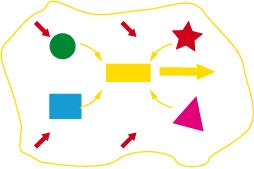
A yellow team is an open system in which all kinds of different roles are fulfilled. The team is organized flexibly because changes are seen as constant and adjustments need to be made quickly.
Image 10 The yellow self-managing team
In a yellow team everyone assumes that the people do work that they like and that suits them in a natural way. Employees need information, tools and materials for optimal work experience and efficient free access. Continuous learning and understanding things is what motivates people, punishments or bonuses are hardly effective.
In a yellow team people are also working with other dominant value systems. There will also be parts or teams in which a value system is clearly dominant and the associated structure and leadership style are clearly recognizable. They realize, however, that they are part of a whole, follow the yellow self-steering vision and contribute with their knowledge and natural inclination to decision-making, organizing, communicating or connecting to the entire team.