Team GROW-Cases

The Academy prepares you for supervising team GROW case sessions. These are regular two-hour meetings with groups of 5-15 participants.

The core of the team GROW-case sessions is the discussion of practical situations (GROW-cases) of managers and employees in a non-hierarchical setting. The GROW-cases submitted by the participants themselves will be discussed in terms of goals, responsibilities and core values. The intention is to support the GROW case submitter in successfully realizing the practical situation.

You may be asked, prior to a team GROW-case session, to describe a team situation in your work environment. The intention is that the description shows that the timely and target level achievement of goals along the core values is going well or not going well. In each team session one or two GROW-cases are discussed.

This may be a team situation from the past, present or the near future. It may be positive or negative; keep it practical and realistic. The starting point is to discuss your submitted GROW case(s) in plenary session. As a result, participants individually and collectively become even more aware of the inextricable connection between core values, behaviour and result-orientation.

When a team GROW-case submitted by you has been discussed in a session, the following steps will be taken:

  • The executive or operational manager who will successfully realize the team GROW-case in daily practice will be mentioned (by name).
  • The most important learning points of this GROW-case treatment will be written down.
  • You (as the submitter of the GROW case team) are requested to transfer the results of the team case to the final or operational manager.

Besides the team GROW-case sessions, this module is also used in the Academy as a manual. You can do the exercises yourself at times that suit you best. Exercises that are included are self-exercises (which you can do on your own) or duo exercises, which you can do with one or more colleagues.

By coaching each other and giving feedback, we support each other and call on each other’s knowledge and experience to actually investigate alternative solutions. In this way we tap into each other’s creativity and give each other room to grow.

The ultimate take-away of the Academy for you is that you start experimenting with different behaviour based on your acquired awareness and insights. You will also learn to address and support each other within a team with regard to behaviour and result-orientation.

After you have completed this Team Module of the People Change Academy and by participating in the team GROW-case sessions:

  • You will be able to place the concept of facilitating leadership as a way along which everyone can consistently apply (personal) growth power in a concrete and lasting way;
  • You know the basic techniques for coaching or facilitating leadership;
  • You know the pitfalls of coaching.

Your active participation is necessary for success!

Team Program

The Team Leadership Program aims to sustainably increase the implementation power of the organisation at the personal, team and organisational level by means of Facilitating Leadership. The basis for this lies in the extent to which everyone achieves or exceeds their objectives along the core values.

In facilitating leadership, the focus is entirely on the question “how can I best help the other (the employee) to find a solution that works for him or her”.

The manager does not do this by conveying his opinion with arguments, power or coercion, but is involved with the employee by actively listening and by proactively asking questions that invite reflection and self-reflection. The manager’s attitude shows an interest in the other person’s story. He thinks along about the solutions that the employee generates himself, thus indicating that the other person is central in this guidance process and not the leader himself.

By investing the responsibility deeper in the organisation, the organisation acquires a more self-directed character. Employees are more involved in obtaining results and are allowed to steer them themselves. Gaining responsibility, including the associated trust, immediately results in higher intrinsic motivation and satisfaction among employees. This reduces the outflow. This innovative method gives the organisation an image boost in the labour market, resulting in an inflow of a higher quality and motivation level.

A facilitating style of leadership gives immediate financial benefits:

  • Responsibility for the Kpi’s lies with the employees who have the most influence on it. This gives employees direct feedback on their performance and they themselves ensure an improvement on all Kpi’s (Turnover, Gross Margin, KGA, etc.).
  • The new leadership style generates more independence on the floor, which means less team management and staff is needed.
  • Employees are more motivated and work longer, resulting in savings in recruitment and training.
  • Absenteeism due to illness decreases significantly.
  • The investment in external support is quickly recouped.

Translating the organisation’s strategic spearheads into practice and realising or surpassing the business plans over and over again requires core values and behaviour that are goal-oriented and permanently stimulates. When, in the interest of the case, we really hold each other accountable for our behaviour and our responsibility, working is fun and we are successful.

The service oriented team

The culture of a green service oriented team

In a Green team culture people strive for equality and harmony. The essence of green is: “Life is meant to live every moment. We can all understand who we are and how wonderful it is to be human if we only accept that everyone is equal and important. Everyone must be able to share in the pleasure of living together. Every person is connected to others in the group, every soul travels together. The group grows when bringing together all life forms. Bad behavior and negative beliefs disappear when we look into the person and experience the richness of that person. Peace and love for everyone.

How do you recognize a green team?

  • The leader is not clearly recognizable in terms of clothing or status, but is absorbed in the group
  • There is a harmonious atmosphere of peace and tranquility
  • The work is team-oriented, people consult a lot and share ideas and feelings
  • The leader serves the group and takes care of his / her people
  • Employees divide roles in consultation, people bring in a lot of knowledge and information
  • Decisions are only taken after everyone has been heard, consultation can take a long time, but if consensus is reached, everyone is 100% for it
  • There is little to no competition, there is enough room for everyone to give their input and add value
  • There is a high tolerance for people who think differently, diversity is encouraged
  • The ubiquitous presence of empathy ensures a high customer focus, excellent care, an urge for sustainability and social responsibility

The most important characteristic of a people-driven team culture is that the values of the team are decisive for the cooperation in the team. In the team values, the supervisor consults and supports the employee from the agreed values in realizing his goals. The team is managed from trust and the values of the team are the binding factor that ensures that the team can grow even faster because everyone has freedom and can take on responsibilities.

Leadership in a green service oriented team

For the average manager, the values of culture are often the hardest to get used to because he is used to having the last word from his role. That does not work in a green team. The values of the manager must show servant leadership and the employee himself can indicate which personal development and results he wants and is able to achieve. To facilitate this, behavioural characteristics are developed per core value. With this, everyone knows exactly which behaviour is desired to realize the agreed goals. This gives a lot of clarity to each other in the team and the customers.

The great advantage of working with values in relation to competencies is that the core values of the team can be linked to the core values of the people. This allows the energy of all employees to be focused on the realization of the strategy and the growth of the company. Employees can take more responsibility in this culture and they can also implement their own ideas in the team much more. People now know very clearly what results they have to achieve and with what behavior they are allowed to do this.

A green leader is a group leader that says:

  • Discover your inner strength and that of others
  • Go for collaboration and the development of a group of people
  • Share the resources of the community with everyone
  • Liberate people from their dogmas and avarice
  • Make decisions by realizing consensus
  • Develop your spirituality and harmony with others

The structure of a green team

A typical green team is organized as a Round Table. In a circle of people, subjects and personal experiences are shared and people work in dialogue towards consensus. The leader is equal to his fellow colleagues.

The structure of a green team

The role of moderator can rotate or work with a so-called talking stick, the person who holds the talking stick is the person that is allowed to talk, listens to the other attendees and reflect on what is being said. A rebuttal or a different opinion is only allowed when the talking stick comes into your own possession. The pace of the conversation is therefore often low, there is no heated discussion like in an orange team.

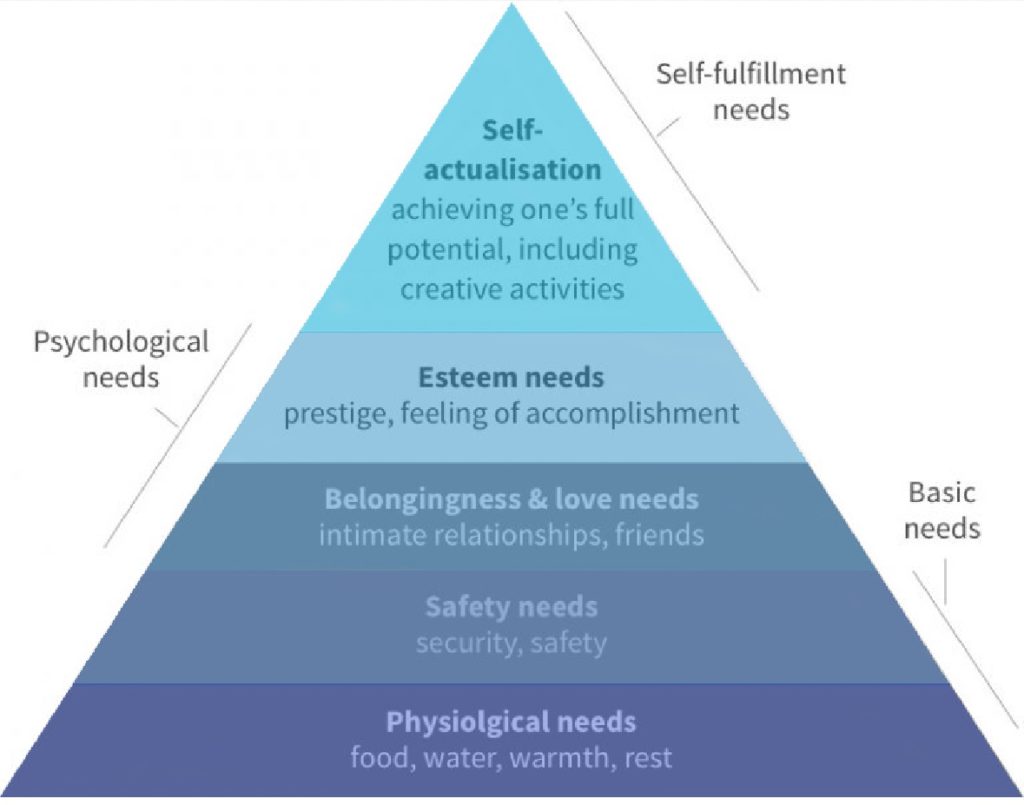
Personal development is encouraged and the prevailing idea is that everyone has the moral obligation to fully develop his potential and to achieve Maslow’s self-actualisation stage.

Image 9 Maslow’s Pyramid

The strategic team

The culture of an orange strategic team

The orange organization and people strive for results and success. The core of orange is: ‘I want to get ahead and I want to win to get somewhere with my life. The world is full of opportunities for people who go for it every day and dare to take risks. Nothing is certain but if you are good and you play the game smart then you find the best opportunities. You have to believe in yourself and then the rest follows automatically. You can not allow yourself to be slowed by structures or rules if you want to achieve something. Instead, you can use personal experiences to become better at what you do. An important belief is that I have faith in myself and have the intention to change the world. Collect the data, develop a strategic plan and go for the number one place ‘.

How do you recognize an orange team?

  • There is a charismatic leader who likes to be in the spotlight and radiates a lot of energy
  • There is a hectic atmosphere, full of optimism and big dreams. Multitasking is normal.
  • Not being able to do something is not an option, everything is seen as a challenge, the credo is “fake it, until you make it”.
  • The pace of work is high, people make quick decisions, but don’t stomp on throats.
  • The leader sees himself as a motivator and booster, has little patience with emotions and goes for the end result
  • Employees work hard and make long days, at the end of the week there is often something jointly organized to blow off steam (“work hard, play hard”)
  • People are very ambitious, both in their projects and in their own careers. A management job is a stepping stone to a higher position. Opportunism is more the rule than the exception
  • People are judged on results orientation and competencies for their career opportunities. The top is small, so it is “up or out”.
  • Work is often cast in projects. Work is often measured or objectified in a different way. Every month and every quarter the results are reviewed and compared to the strategic plans.
  • Rules and agreements are useful as long as personal freedom and entrepreneurial drive are not restricted.
  • People are very status sensitive and express this in their appearance (lots of brand clothing, expensive shoes) and working environment (the latest gadgets, the largest office).

With the orange value system and the orange results culture, the company is business-like, result-oriented and professional. Competition is an important mechanism to bring out the best in people.

In an orange organization, team members / employees are paid for results both for their work and for their professional development. For their work this often happens by agreeing clear (financial) results. For their professional development this is done on the basis of competencies and feedback from colleagues.

The result-oriented culture provides people with more results and success, but can also ensure that managers and employees only go for their own results and that a group feeling is lacking.

Leadership in an orange strategic team

An orange leader is an individualist. He / she can not be stopped by what others think or do. He steers on data, models or proven practices, but only takes over what others say after a thorough analysis. The orange leader is an energetic person who is always in control and likes to express what he believes in. He / she finds himself objectively, he is not influenced by emotions and prefers to look at the facts. He also does not interfere with emotional problems, either his own or others. Feedback to employees is given without looking or blushing, without taking into account the feelings of others.

This leader is absolutely focused on the goal and takes his team with it. He is an opportunist and is not afraid to get his hands dirty or to play a politically strategic game. There are no problems, only challenges and the people who work for him must go along with it. Being successful is important and is expressed in money, titles, possibilities or status. If something goes wrong or does not work correctly according to this leader, he will weigh all factors and from there set a new, intelligent course. This leader believes it is important to further develop himself professionally, because this creates more chances for success. These development possibilities are also offered to his team.

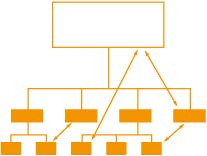
The structure of an orange strategic team

In an orange organization, the structure is similar to that of a blue organization. There are different layers and clear management structure. Whereas in the case of a blue structure, the managers are usually responsible for a functional department, they are responsible in an orange organization for a business unit that has its own profit and loss independently of other business units. Business units are often product, service or market oriented. Each business unit has all the functions in house.

Image 6 The structure of an orange team

Communication between departments and business units is frequent and necessary (for exchange of knowledge and continuous improvements). The manager is not a gatekeeper for information, but encourages employees to search for information themselves. Conversations usually take place in discussion form. Pros and cons are weighed and substantiated with clear, preferably measurable arguments.

In this organization, the employee talks with his supervisor about how he / she wants to develop. In the result-oriented and competence-oriented leadership style the employee has more influence on his work and he is not only judged by his supervisors but also by his colleagues and his staff. This gives him feedback from multiple angles that can help him to develop himself. All people, from high to low, get a more objective picture of themselves and with the help of that information they have a greater chance to grow successfully.

The bureaucratic team

The culture of a blue bureaucracy

In a blue organization culture people strive for order and security and people are prepared to sacrifice themselves for systems that provide security. The core of blue is: “A single guiding force (God, Evolution, Something) controls the world and determines our future. I follow the indicated path that connects me with something much greater than myself (a belief, tradition, religion, organization, or movement). I voluntarily surrender my desires from this moment on from the knowledge that I will be rewarded later on. I am steadfast for what is right and good, always subordinate myself to the right authorities. ‘ The blue value system and the blue organization culture are based on the idea that the world is a potential chaos that needs to be organized.

How do you recognize a blue team?

  • There is a clear structure (the typical rake) and responsibilities are clearly and sharply assigned.
  • There is a certain peace and quiet in the organisation, everything happens neatly on time, there is little hectic and there is a ‘nine-to-five’ mentality
  • Appointment is an appointment, not following an appointment is a sin
  • The pace of work is not very high, people go for quality and work steadily down the lists
  • The leader is a reliable person, who can sometimes appear boring and colorless
  • Employees are docile and loyal, do not question the authority of their superior
  • There is a lot of chattering and gossiping among team members, people are rarely outspoken about things
  • There is an atmosphere of ‘thinking inside the box’, people cling strongly to their job description and will not easily deviate from it
  • Because of thinking in tight frameworks, things that fall into a grey area of responsibility are not taken up. “This is not in my job description” or “I am not responsible for this” are often mentioned as excuses. Customers have the feeling of being sent from pillar to post.
  • There is a clearly perceptible distance between the departments.

The blue value system and the blue organization culture are based on the idea that the world is a potential chaos that needs to be organized. The blue value system and the blue organization culture are based on the idea that the world is a potential chaos that needs to be organized.

For a blue organization, a smooth running mechanism of work is important: separate, defined components must fit together perfectly and thus form an efficient workflow in the organization. Each component has its own task and responsibility and in collaboration the components come to a predictable result. If parts fail, they can be replaced because the work is well-defined and structured.

Leaderschip of a blue bureaucracy

The blue leader is very task-oriented and gives the example what is needed for it: order, structure and dedication.

Task-oriented blue leaders see themselves as conductors of musicians who can come under the proper direction of a perfect performance of well-known compositions. Harmony through cooperation gives blue a satisfied feeling: if everyone does their own and thereby the size and the pace are properly indicated, a smooth execution can be achieved.

Blue leadership tries to exclude coincidence, improvisation and own interpretations in the work process. Uncertainties in the organization must be reduced to a minimum because they threaten quality and efficiency; only if everyone knows what they have to do and keeps to the rules, an optimal performance can be provided. Based on this awareness, blue leaders are strongly motivated to keep details in mind, monitor employees, limit variation in approach and ensure reliability, timeliness and quality of the process. There are many unpleasant aspects in that work, but for a task-oriented leader this is inherent to his task. After all, his duty is to guarantee a reliable production and it is inevitable that frivolities and other vices, no matter how attractive, are banished.

The structure of a blue bureaucracy

A bureaucracy has a clear ‘rake’ structure. There is a leader, who basically follows the same rules as everyone else, but who, because of his seniority, is seen as ‘older’ or authority. The leader meets with his/her management team. The management team passes assignments downstairs (top-down). Managers usually have the responsibility for controlling a functional department, e.g. HR, Finance, Production, Sales, etc.

The structure of a blue team

Communication follows the indicated structure. Matters that have to be taken from one department to another move via the management layer. Consultations are held there and decisions and orders go back to the departments. Each department is a ‘pillar’ that supports the organization and does not have much common ground with the other ‘pillars’. The manager is, as it were, ‘gatekeeper’ for the flow of information. At the top of the organization, people have much more information than at the bottom.

People are not interested in further development outside of their own field. Since promotion depends on seniority and there are few promotion opportunities, you often see people working in the same job for more than 10 years. Employees with more than 20-25 years of service are no exception.

The autocratic team

The culture of a red autocracy

In a red organization culture people strive for self-preservation and self-respect. The essence of red is: ‘Life is a jungle. It is about survival and the most fit wins (‘Survival of the fittest’). I am hard and expect from the people around me that they are too. I take charge of people and bend them to my will. Respect and reputation are more important than life itself, I avoid at all costs that I lose respect or my reputation. I do what I have to do and never take a step back. I take what I think is mine and I do what makes me feel good. I do not have to worry about what has not happened yet.

How do you recognize a red team?

  • There is a clear leader that everyone is afraid of or has a lot of respect for
  • Everything has to be done immediately, there is a constant atmosphere of urgency
  • There is often conflict, drama or another emotionally charged situation
  • The pace at work is high, people make quick and short-term decisions
  • The leader decides a lot himself and tends to get involved everywhere
  • Employees pay close attention to the leader’s mind before they approach him to talk about something.
  • There is a lot of competition for power, it is dangerous to show vulnerability
  • There is a macho atmosphere, tough about how hard you work is normal
  • People are lived through the issues of the day, little time is taken to think about the future
  • Rules and agreements are often not observed

Leadership in a red autocracy

In a red autocracy, managers work from “power and control”. This power culture includes an intimidating leadership style, control / authoritarian management behavior and dependent, frightened employees. In an autocracy, the supremacy lies with the leader. He has a small number of ‘confidants’ who manage the organization on behalf of the leader. These managers have a lot of power and use that power to wield the scepter over their employees.

Leaders have the basic assumption that people are lazy, do not take responsibility and do not like hard work. The only way to put them to work is through coercion, threat and intimidation. This leadership style creates dependent and fearful behavior from the employees to the managers and often from the managers to the leader.

The involvement of the employees in the organization is very small because there is a lot of distrust towards each other. Everyone looks up continuously because they are afraid of unexpected negative reactions or consequences on their behavior.

The structure of a red autocracy

In an autocracy, the undisputed leader is at the top. There is a great power distance to the layer below. The layer under the leader is mainly chosen on the basis of the relationship with the leader (in particular on trust, built up in the joint past) and less on objectively observable properties. The layer under the big boss are often chiefs, job supervisors, who keep in mind that the work is done by the largely unskilled or low-skilled workers who do the hard work.

Afbeelding 4 The structure of a red team

The workers work hard to provide for their livelihood and have little time or energy left to think about how they can improve their living conditions. They are often afraid of the consequences of bringing forward new ideas or improvements and prefer to keep their mouth shut. Some of those who suggested ideas saw that the chef initially ignored the idea and later took credit for the idea himself.

The family team

The culture of a purple family team

In a purple organization culture people strive for ritual solidarity between people. The essence of purple is:

  • “We look for safety for our kind of people through family relationships and we follow our ancestors because they are with us.”
  • “Our life is full of traditions and customs We want to live in harmony with our immediate surroundings.”
  • “The world view of a purple values driven system and organization culture is that the big world is unsafe and incomprehensible and people have to bind each other with rituals and customs.”

How do you recognize a purple team?

  • There is a clear founder of the company and hero stories are told about him (sometimes her)
  • There are many photos of the founder and important events from the past on the wall at the reception
  • The final decision on business matters always lies with the founder, crucial decisions are made at the kitchen table with the family
  • The leader of the organization comes from the family ranks or is chosen by the family
  • There are almost only family members and friends who have joined the company via-via
  • Birthdays and special personal events receive extensive attention at work
  • People who do not (no longer) function are not sent away, but a spot is sought in the company so that they remain connected
  • The company has a clear link with the village or the neighborhood in which it is located
  • Older people or people with many years of service have more authority

Leadership in a purple family team

Purple leadership meets the needs of employees to bind them and provide security. The bond between the group and leader is unique in a purple system: the individual plays no significant role and the interplay between group members takes place according to fixed, almost organic patterns. This fits in with working together in purple companies where the employees as group members react to the leader’s signal without thinking about personal risks and immediately do what they are asked to do. Through complete dedication to the purple leader and organic functioning, the group is more effective than when everyone would consider his role and position. In a purple organization culture the group counts and not the opinion of the employee. Sacrifice for the group and the company is self-evident.

The leadership also plays an important role in the rituals in the company (for example a personal chat from the founder at the Christmas party) and the interpretation of the chosen strategy and in connecting past, present and future. A decision by a purple leader is undisputed for every group member because unconsciously it is assumed that the leader is connected to a higher power.

Purple leaders succeed in giving meaning to members of the group by showing them a place in the group and in the history of the company. The company will protect them and fear and uncertainty will disappear. Employees see their place and role as very modest and then act accordingly.

The structure of a purple family team

A purple family business is fully organized around the leader. The leader surrounds himself with immediate family members whom he fully trusts. Around it is a circle of friends and good acquaintances. Only the first ring is involved in decision making and advisory discussions. The circle around it is expected to follow the leader’s decisions without questions or murmurs.

Image 3 The structure of a purple family team

Reciprocity is an important principle in the purple organization: If you, as an employee, do your work well and contribute to the organization as a whole, the organization will continue to take good care of you, even in times when things go less well with the organization or with you as an employee. A disadvantageous effect of this principle is that this organization often offers room to employees who actually no longer add value or even show sabotaging behavior. Tolerating these employees for too long has a negative effect on other employees: a rotten apple must be removed from the basket, otherwise the others will be lit.

Change barometer

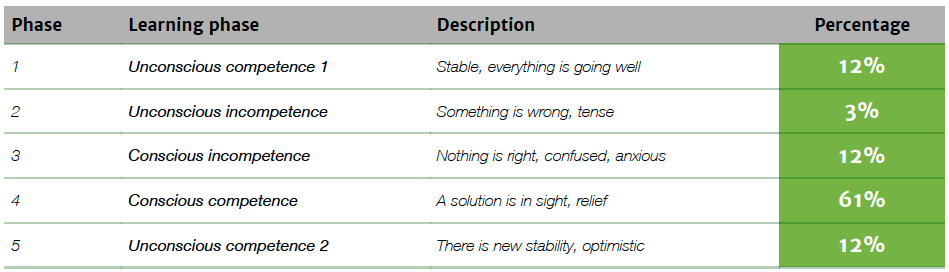
The change barometer indicates where the employees stand in a growth and/or change process.

Change Barometer
Change Barometer

Change preferences

With a professional shift your personality and associated beliefs and values are unchanged. You develop and learn new skills or knowledge in order to excel more in your work. This process is often referred to as professional growth.

Professional change

With a professional shift your personality and associated beliefs and values are unchanged. You develop and learn new skills or knowledge in order to excel more in your work. This process is often referred to as professional growth.

Personal development

With a personal change you’re willing to change your current ideas, beliefs and values. You are undergoing a profound change for a new identity. This is often called personal development.

Change Preferences

Change skills

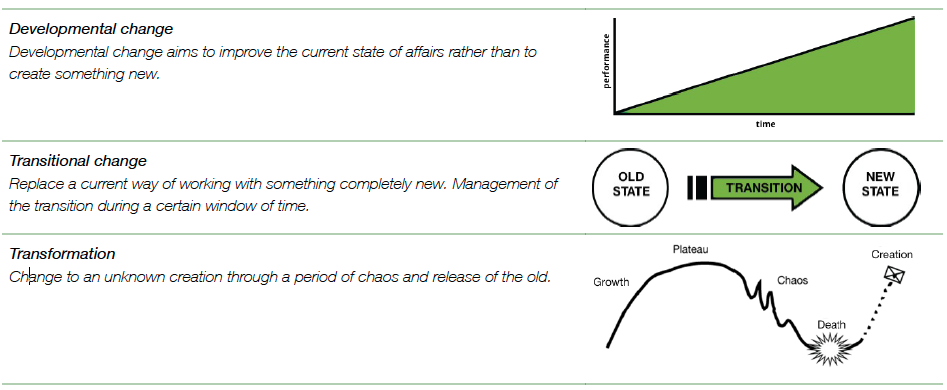
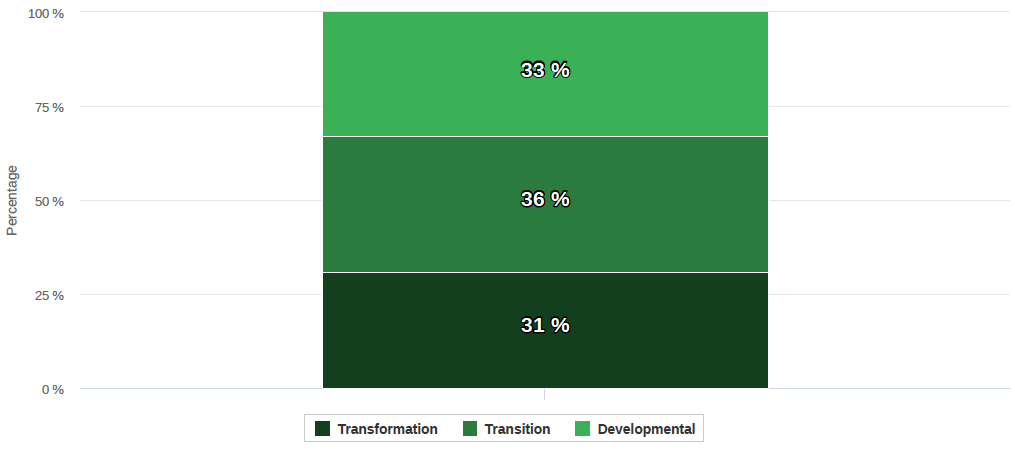
There are three types of changes that occur in organizations. The figure below illustrates this.

Change skills
Change skills

The distribution of the change skills within the organization illustrate the type of change that will be most successful.

Distribution Change Skills